20161027 – The 20 Best Comic Book Couples — CBR.com

When most people in the U.S. think of comic books, “romance” isn’t the first thing that comes to mind. When you say “comic books,” most people think “superheroes.” But from the 1940s to the early 1960s, romance comics in the United States such as “Young Romance” were extremely popular. However, a comic book doesn’t have…

via The 20 Best Comic Book Couples — CBR.com


My Selection from this Top 20 :

18. Reed Richards and Sue Storm

reed-richards-sue-storm-wedding-kiss

He’s a super-genius who can stretch his body into a near infinite number of shapes. She can turn herself and other objects invisible. They’re Mr. Fantastic and the Invisible Woman, and they’re awesome together.

When Reed Richards and Sue Storm first appeared in “The Fantastic Four” #1 in 1961, they were considered revolutionary. Until their appearance, couples in comic books tended to be bland and unrealistic. But “The Fantastic Four” broke new ground in relationships as well as storytelling, because they weren’t perfect. Richards and Storm would argue, fight, and even break up. Despite these problems, they always managed to come back together.

They gained their powers together, fought together in the Fantastic Four, and eventually married in “Fantastic Four Annual” #3 (1965). Over the decades, they’ve had two children together and Sue has gone from the Invisible Girl to become the more powerful Invisible Woman. They’ve left the Fantastic Four and returned, faced death countless times, and seemingly have left the Marvel Universe altogether in 2016’s “Secret Wars.” We’re sure we’ll see them in each other’s arms again eventually, though, because their greatest power is staying together.

12. Bruce Banner and Betty Ross

bruce-banner-ross-kiss-wedding

For as long as Bruce Banner has been the rampaging Hulk, he’s been in love with Betty Ross. Ross first appeared in “The Incredible Hulk” #1 in 1962, where she first met Banner before the experiment that infused him with gamma radiation transformed him into the Hulk. As Banner struggled to control his new power, Ross fell in love with his gentle and intelligent soul.

But their relationship hasn’t always been smooth. At first, Banner struggled to keep his secret from her, alienating her. When his secret was exposed, he had to go on the run from her own father, Thunderbolt Ross. She stood by him, even as he went on the run for his life. But Ross has been more than just his long-suffering girlfriend. She’s often broke up with Banner over his failed attempts to control the Hulk. Over time, she’s even become his enemy as she was transformed into the supervillain Harpy, and later became the powerful Red She-Hulk. Through all their transformations and conflicts, their love for each other has remained and continues to drive them.

9. Batman and Catwoman

batman-catwoman-kissbatman-catwoman-kiss

The relationship between Batman and Catwoman is complex, because Catwoman is complex. Sometimes, Catwoman is a hero. Other times, Catwoman is a villain. Batman is always caught between wanting to arrest her and wanting to make love to her.

First appearing in “Batman” #1 in 1940 as “the Cat,” Selina Kyle has evolved into one of his most formidable villains. Catwoman engages Batman in a chess game, with him trying to reform her while she uses him to pursue her own interests. Although she’s supposed to be an enemy of Batman, Catwoman has her own moral code that’s even led her to team up with Batman. She’s a gray area in Batman’s usually strict moral code by being a combination of good and evil. He’s attracted to her because she’s a female version of himself: a dark creature that prowls the night, straddling the line between right and wrong.

While we’re always rooting for Batman to find love, we know it’s more important for him to fight crime, which is why we love watching him pursue Catwoman and fight villains at the same time.

2. Peter Parker and Mary Jane Watson

peter-parker-mary-jane-weddingpeter-parker-mary-jane-wedding

Of all the couples in comics, the relationship between Peter Parker (Spider-Man) and Mary Jane Watson seems to be one of the most popular. Unlike most superheroes whose relationship are on the sidelines, the romance between Parker and Watson is often the focus of the webslinger’s stories.

Watson was first mentioned in 1964’s “The Amazing Spider-Man” #15, where it became a running joke that Aunt May was trying to set Parker up with her. Parker constantly found ways to avoid her, and the reader never got to see her face until “The Amazing Spider-Man” #42. In that iconic moment, MJ turns and says, “Face it, tiger…you hit the jackpot!” Parker falls deeply for her, and so did the readers.

The two had a turbulent but deeply passionate romance. In 1987, “The Amazing Spider-Man Annual” #21 highlighted the wedding of Parker and Watson. Their marriage turned into one of the few bright spots in Spider-Man’s life. No matter how bad things got, he could always come home to her. That’s why it caused an uproar when the marriage was erased from history in 2007’s “One More Day.” We’re still hoping Marvel comes around and brings these two back together.

1. Superman and Lois Lane

superman-lois-lane-wedding-kisssuperman-lois-lane-wedding-kiss

By far, the most popular couple in comic book history is Superman and Lois Lane. She’s been an important part of the Superman mythos since their first appearances in “Action Comics” #1 in 1938. In work, Clark and Lois were rivals at the “Daily Planet,” but as Superman, he became Lane’s protector, always ready to leap in and rescue her.

The love triangle of Clark, Lois, and Superman has been a complex and ironic one. Over the years, she became increasingly attracted to Superman, ironically while sneering at the nerdy Clark Kent. The back and forth between the two has been a delight to fans for decades, even becoming the focus of the 1990s TV show, “Lois and Clark: The New Adventures of Superman.”

In the comics continuity, Lane eventually learned Superman’s secret identity. In “Superman” #50 (1990), Clark officially proposed and revealed himself as Superman. Despite Superman’s death in 1992, he came back to life and the two were officially married in 1996’s “Superman: The Wedding Album.” Their love story is part of what makes Superman great. She brings humanity to Superman, and he takes her places she’s never dreamed of.

6. Scott Summers and Jean Grey

scott-jean-grey-wedding-kiss

scott-jean-grey-wedding-kiss

As Cyclops and Marvel Girl, Scott Summers and Jean Grey both first appeared in “The X-Men” #1 in 1963, where they were students for Charles Xavier’s School for Gifted Youngsters, along with Beast, Angel, and Iceman. Over time, Cyclops and Grey fell in love. But when Wolverine joined the team in “Giant-Sized X-Men” #1 in 1975, Grey’s heart was torn as she found herself attracted to Logan instead. The rivalry between Wolverine and Cyclops over Grey’s affections threatened to tear the team apart.

The biggest twist in their relationship came when Jean Grey sacrificed herself to pilot a crashing space shuttle. Cyclops was devastated, but she miraculously returned as the Phoenix in “Uncanny X-Men” #125 (1979). Alas, her god-like powers and possession by the Phoenix Force forced her (well, her duplicate) to commit suicide in “Uncanny X-Men” #137 (1980). Grey returned in a stunning twist, and her rocky relationship with Cyclops and Wolverine continued with Cyclops even marrying her in “X-Men” #30 (1994) before later dying again. It seems like death always comes between them.

Pimpf’s POV : Those are among my fave Characters from comic books : Reed and Sur are among the first official Marvel family, Bruce and Betty have always lived through hard times with their love and couple but love is there , Bruce and Selina too even though they not always appear on the same side they are really attracted to each other ( that kind of shows up well in Gotham TV show),  Clark & Lois the perfect couple, even though she took some time to finally recognize Clark as Supes, they were meant for each other, as is for me Peter and Mary Jane, what a couple and what a mistake to set them apart.

And what could I say for two of my favourite heroes ? Scott and Jean/ Cyclops and Pheonix, they were always the good couple for me the one that finally has been and should had always been,  I didn’t and don’t like what Marvel made with both characters, they twisted them too much, and probably don’t recognize myself in Marvel Stories since them… yes people get divorced, separated, etc… but it’s a damn comics something you refer to  they were always the ones for me . they are still the ones that deserve to be the couple of the comics for me


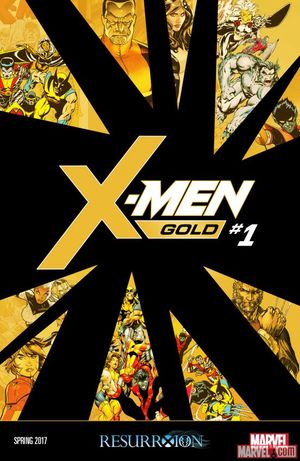
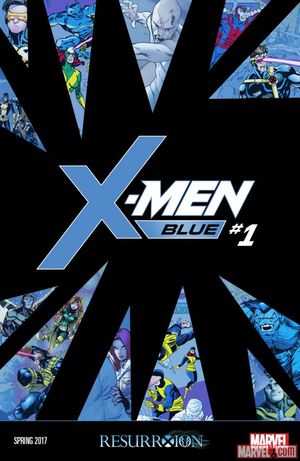
20161022 – Comics News : X-MEN Blue & Gold Back In Two New 2017 Ongoing Titles – With Softball Games

Re-living the 1990s with the Blue & Gold teams.

Two more new X-Men related ongoing titles have been announced as part of ResurrXion: X-Men Blue and X-Men Gold. Evoking the color-themed teams of the early 1990s Chris Claremont/Jim Lee/Whilce Portacio era of the mutant books, it’s unclear if the throwback nature of the names will be carried through to the stories and the team line-ups.

« Without spoiling too much about the ending of Inhumans vs. X-Men, the X-Men have been living with a cloud hanging over their heads—literally. The current roster of X-Men titles has been defined by this pervading sense of doom, the fact that mutantkind is on the brink. Well, one way or another, the impending threat of extinction subsides, and this is the story of what happens next, » said editor Daniel Ketchum. « The X-Men have a future. Now what are they going to do with it? »

Fellow editor Mark Paniccia described these two new X-Men books as the « quentessential X-Men team books » of old.

« These are the return to the quintessential X-Men team books. Rosters you’re going to love. The kinds of stories we all grew up on, » said editor Mark Panicia. « You’re going to dig them and maybe even feel a little competition between the books, trying to outdo each other. If I do my job right, there will be readers who are Team Blue or Team Gold. Don’t get me wrong. You’ll enjoy both but you will have a home team. »

« Let’s not skip over the fact that we titled these books X-Men Blue and X-Men Gold! » added Ketchum. « From the top down, we conceptualized these series as our love letters to the characters and stories that made us the stalwart X-Men fans we are today. Both books boast all-star lineups and the adventures they embark upon are fitting of their statures. These are the classic heavy-hitter X-Men, doing what they do best. »

The original blue and gold X-Men teams launched in 1991 when X-Menbranched out from the long-running Uncanny X-Men title. The X-Men‘s blue team consisted of Beast, Cyclops, Wolverine, Psylocke, Rogue, Gambit, Jubilee, and Revanche. The Uncanny X-Men’s gold team were Storm, Jean Grey, Archangel, Iceman, Colossus, Forge, and Bishop. The two teams operated in the-color coded designation until a shake-up in 1995’s X-Men #41.

« Extinction is no longer staring them in the face, so the X-Men can exhale and turn their attention back to doing what’s defined them since the beginning: Protecting a world that hates and fears them, » said Ketchum. « These new titles won’t cast the X-Men as members of a species fighting for their survival but rather as big, bright, colorful super heroes who want to demonstrate to the world that they want to walk with them hand-in-hand into the future. They’ll have costumes with capes, a school, and softball games. Oh, there will be softball games. The goal is to tell exciting new X-Men stories while keeping an eye on the tropes and touchstones that longtime X-Men fans cherish. »

Source : X-MEN Blue & Gold Back In Two New 2017 Ongoing Titles – With Softball Games

20161022 – Archery, Activism, Anniversary: Celebrating 75 Years Of Green Arrow — CBR.com

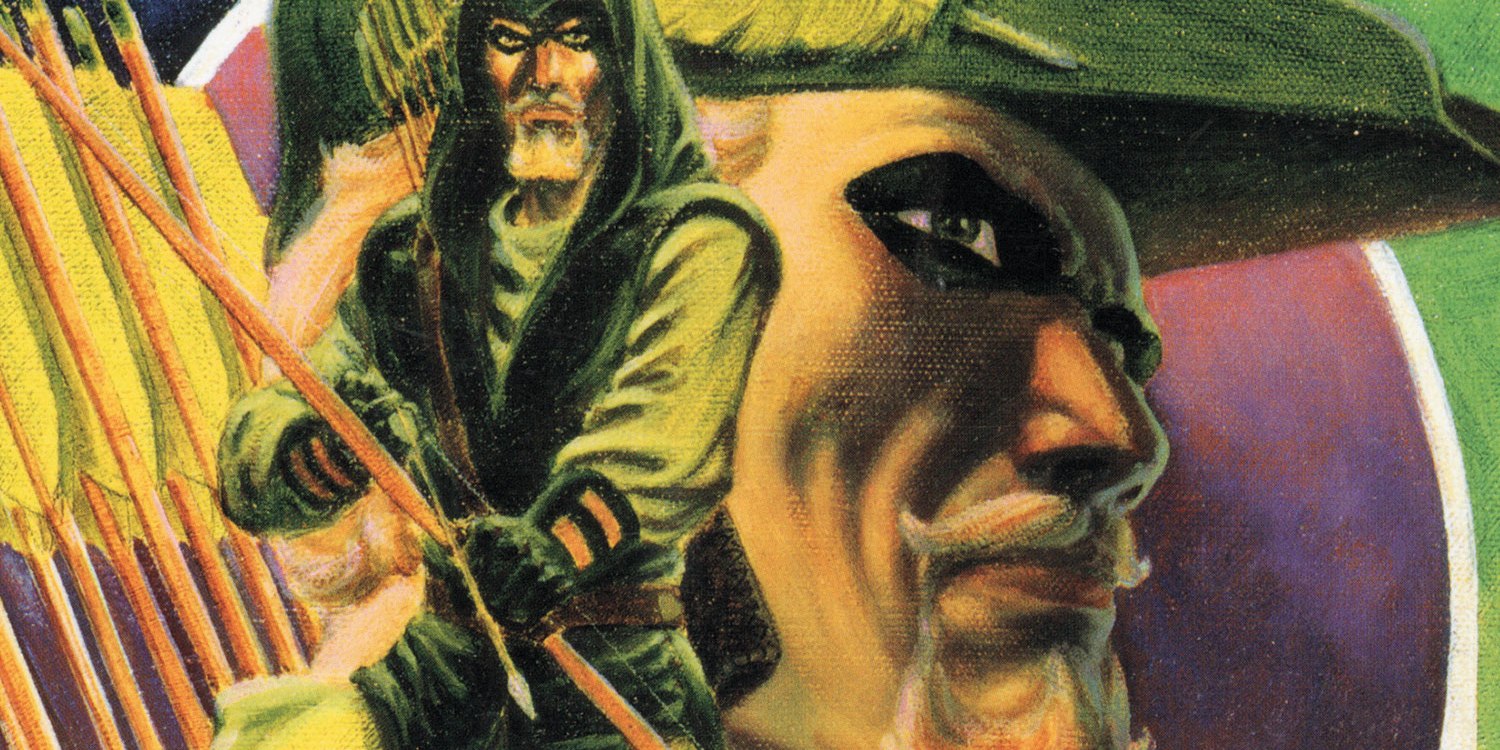
Green Arrow was born in the Golden Age of Comics and returned to prominence in the Silver Age, but it wasn’t until the 1970s that the character found a compelling voice. More recently he became an unlikely television star — and eventually the elder statesman of The CW network’s shared superhero universe. Throughout it all he’s been written…


Archery, Activism, Anniversary: Celebrating 75 Years Of Green Arrow

Green Arrow was born in the Golden Age of Comics and returned to prominence in the Silver Age, but it wasn’t until the 1970s that the character found a compelling voice. More recently he became an unlikely television star — and eventually the elder statesman of The CW network’s shared superhero universe.

Throughout it all he’s been written and drawn by some of comics’ greatest creators, and endured a few radical reinventions. The most famous one ended (arguably) almost 30 years ago, but it continues to inform the character. In fact, it’s only part of a pretty rich history. Since Green Arrow turns 75 this year, today we’ll consider how he got so far.

OVERVIEW

Green Arrow saves the Justice League, by Mike Sekowsky and Murphy Anderson

Green Arrow’s publishing history breaks down into a few big chunks. First is the combined Golden and Silver Age era which started with the character’s 1941 introduction and lasted through most of the 1960s. Next is the “activist” era of the 1970s and ’80s which began with the character’s late-1969 makeover. Finally (as far as big chunks go, that is) there’s the “grounded” era which the 1987 “Longbow Hunters” miniseries inaugurated. After that, various Green Arrow creative teams have tried to reinvigorate the character using combinations of earlier approaches.

RELATED: DC Celebrates 75 Years of Green Arrow With New Promo Art

Additionally, in recent years Green Arrow has been adapted twice for television — first as “Smallville’s” answer to Batman, and then as the star of “Arrow” — and was the subject of the unproduced “Supermax” film. The character also appeared (mostly in a supporting role) in a handful of animated series.

Certainly, “Arrow” has reached a lot more viewers than the current Green Arrow comics. However, as the current Rebirthed approach indicates, the activist Ollie Queen is still a powerful influence on the character, despite its roots in the late 1960s and its differences with the TV version. For that matter, both have come a long way from the original.

EARLY YEARS

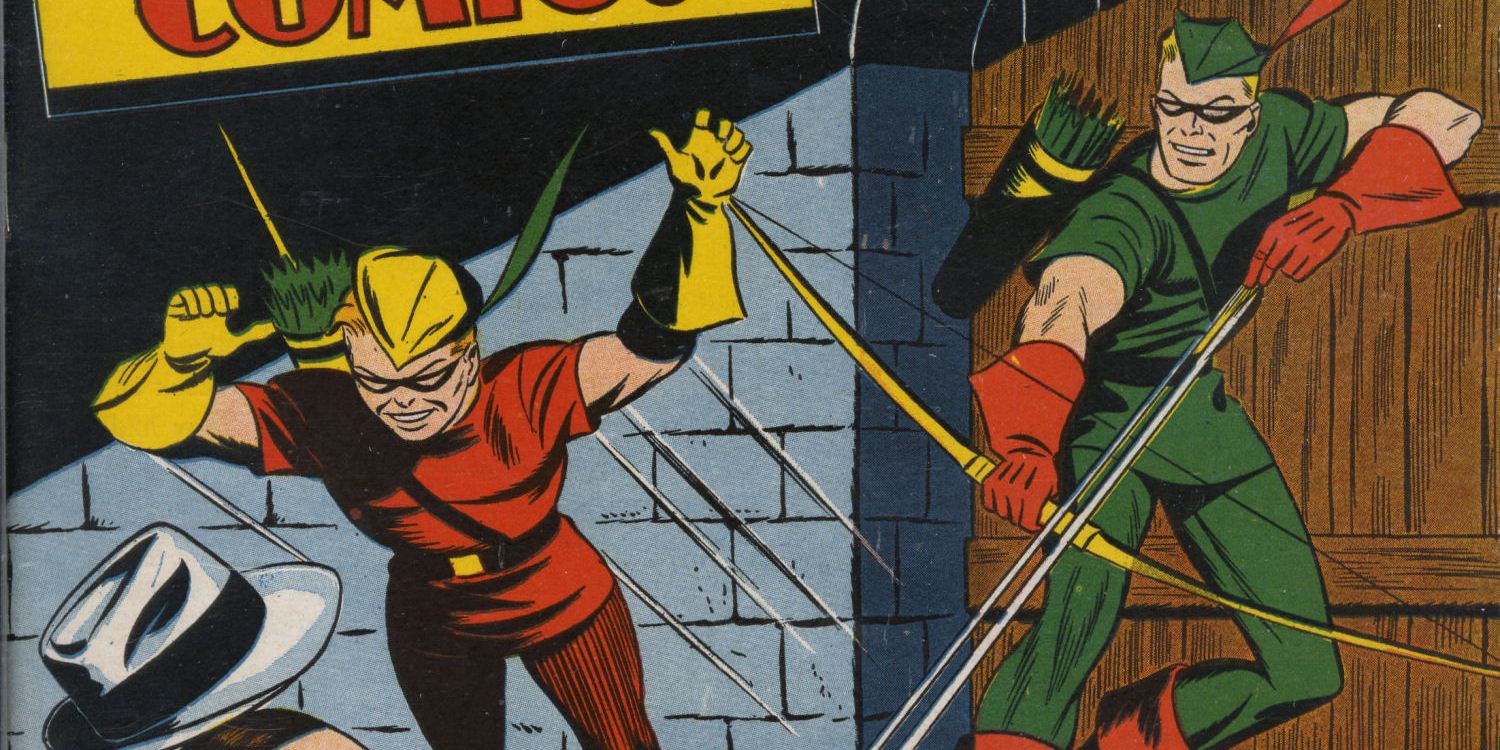
Speedy and Green Arrow, by George Papp

Mort Weisinger and George Papp created Green Arrow for “More Fun Comics” issue #73, cover-dated November 1941. Secretly rich playboy Oliver Queen — who taught himself archery while marooned on a tropical island — the character was a combination of Robin Hood and Batman. He had a sidekick (Speedy, a/k/a Roy Harper), was headquartered in an Arrowcave, and used trick arrows and various arrow-themed gadgets including an Arrowcar and Arrowplane. In the early days he was even summoned by an Arrowsignal.

(Speaking of which, the Batman villain Signalman once adopted another criminal identity, fighting the Dynamic Duo in 1961’s “Batman” #137 as the evil archer called the Blue Bowman. It doesn’t look like there’s been a Batman/Green Arrow team-up involving this, but the combination is certainly low-hanging fruit.)

Today we don’t focus a lot on Green Arrow’s Golden Age adventures, but back then he wasn’t very hard to find. Besides a 36-issue run in “More Fun” (issues #73-107, November 1941 to January-February 1946), he and Speedy appeared in “Leading Comics” issues #1-14 (Winter 1941-Spring 1945) as two of the Seven Soldiers of Victory. However, Green Arrow rolled into the Silver Age on the strength of long-running features in “World’s Finest Comics” and “Adventure Comics.” He was in 131 issues of “World’s Finest” (issues #7-134, 136, 138, and 140) spanning over 21 years (Fall 1942-March 1964). Likewise, he was in over 100 issues of “Adventure,” missing only #206 in a 10-year span from #158 to #269 (November 1950-February 1960). Even if they weren’t book-length stories, that’s almost 300 issues of comics over a 23-year period, which isn’t too shabby by any measure.

Probably this period’s most noteworthy set of stories came from 1958’s “Adventure” #250-56 and “World’s Finest” #96-99, written by Dick and Dave Wood and drawn by Jack Kirby. This was right after Kirby and Dave Wood had created the Challengers of the Unknown, and of course just a few years before Kirby and Stan Lee would create another adventurous quartet for the former Timely Comics. Nevertheless, most Green Arrow stories were written by Ed “France” Herron, one of the regular Batman writers. This probably didn’t help the character’s reputation as a Batman clone.

THE MAKEOVER

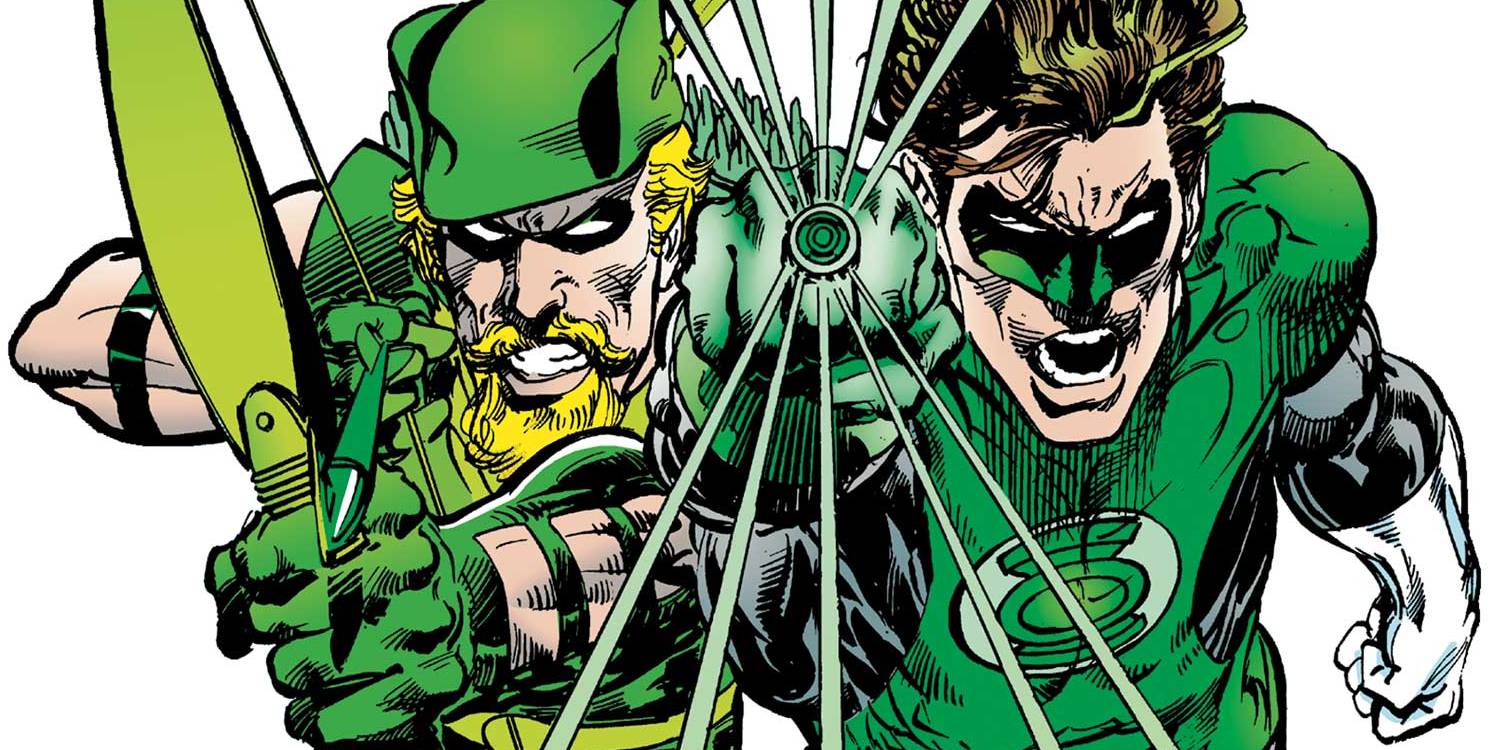
Green Arrow and Green Lantern, by Neal Adams

As of the early 1960s Green Arrow was starring only in the “World’s Finest Comics” feature, and that would end in 1964. Fortunately, by then the character had joined the Justice League in April-May 1961’s “Justice League of America” #4. He would go on to appear in 147 of the original series’ first 230 issues (i.e., prior to the Detroit League), even quitting in #181 and rejoining in #200. Good for him, because apart from the occasional guest appearance in books like “Action Comics” and “Teen Titans,” “Justice League” was pretty much Green Arrow’s only outlet for six years — from March 1964’s “World’s Finest” #140 to April 1970’s “Green Lantern” #76. While that kept the character visible, it didn’t allow for a lot of growth or development.

That all changed in 1969. In August-September 1969’s “The Brave and the Bold” #85, artist Neal Adams gave Ollie a distinctive new costume and some instantly-recognizable facial hair. Shortly thereafter, in November 1969’s “Justice League of America” #75, writer Denny O’Neil took away his fortune and replaced it with a more progressive perspective. Finally, when O’Neil and Adams revamped the struggling “Green Lantern” with April 1970’s issue #76, they brought in the Emerald Archer as a muckraking foil to Hal Jordan’s unassuming space-cop. As the two traveled across America, Green Arrow stood up for the impoverished and the forgotten, romanced Black Canary (Dinah Drake Lance, newly arrived from Earth-Two) and struggled to understand why Roy Harper would get hooked on heroin.

Although the O’Neil/Adams team made a splash with “Green Lantern’s” burst of social consciousness, that notoriety didn’t translate into sales, and the book was cancelled with issue #89 (April-May 1972). “Green Lantern” moved over to an 8-page backup feature in “The Flash,” which serialized the final O’Neil/Adams story. O’Neil stayed on to pen Green Lantern’s solo adventures, but Green Arrow moved on as well, showing up eventually in 18 issues’ worth of an occasional “Action Comics” backup feature (issues #421 to #458, February 1973-April 1976). When “Green Lantern” returned as a regular series in 1976, so did GA; this time drawn by O’Neil’s new artistic collaborator Mike Grell. Grell left after issue #100 (succeeded by Alex Saviuk) but the Green Lantern/Green Arrow partnership continued until January 1980’s issue #124.

Indeed, the Bronze Age was pretty good for Green Arrow generally. Besides co-starring in “Green Lantern” and appearing regularly in “Justice League,” GA once again scored a couple of long-running backup features. First, he returned to “World’s Finest” for 38 issues, spanning April-May 1977’s #244 through October 1982’s #284. Next, he moved to “Detective Comics” for a 44-issue stint, from December 1982’s issue #521 through October 1986’s #567. Along the way, DC published the first issue of the first solo Green Arrow comic, 1983’s 4-issue “Green Arrow” miniseries (written by Mike W. Barr and pencilled by Trevor Von Eeden).

The end of the “Detective” backups capped a run of 16-odd years for the character who’d been made over so famously in 1969-70. After 28 years as a middle-of-the-road crimefighter, Green Arrow certainly wasn’t unpopular; but the character was propelled him into the 1970s and ’80s by a real kick in the verdant pants. Adams’ redesigned costume emphasized Green Arrow’s athleticism, while the ubiquitous goatee conveyed a very with-it sensibility (if not sexuality). O’Neil then opened Ollie’s eyes — and, more importantly, his mouth — to the disillusionments of the 1960s and society’s anguished steps into the ’70s.

At its core, though, the “Green Arrow” feature still came down to standard superheroic fare. Even if the attitude had changed, the trick arrows hadn’t.

THE HUNTER

Green Arrow, by Mike Grell

In a move that must have made the publishing gods chuckle, Green Arrow once again followed Batman’s lead. The 1987 miniseries “The Longbow Hunters,” written and drawn by Ollie’s old artist Mike Grell, was DC’s second miniseries in the new graphic-novel-esque Prestige Format. The first, of course, was “The Dark Knight Returns”; and like that watershed Batman story, “Longbow Hunters” retooled Green Arrow and Black Canary for the no-nonsense 1980s. Grell established that each of them were entering middle age (specifically, Ollie was turning 40), thereby allowing each a bit of self-examination. When it was all over they had moved to Seattle, Dinah had been kidnapped and tortured and lost her sonic scream; and Green Arrow had become a darker, more violent figure. The final O’Neil/Adams story (from those 1972 “Flash” backups) saw Ollie so distraught over an accidental killing that he retreated to a monastery; but “Longbow Hunters” blew past that, with Green Arrow using deadly force grimly against an increasingly-sinister class of criminal.

Grell followed “Longbow Hunters” with an 80-issue stint writing the first-ever “Green Arrow” ongoing series (pencilled by, among others, Ed Hannigan and Dan Jurgens). The book introduced longstanding supporting characters Shado and Eddie Fyers, and in many ways foreshadowed the “Arrow” TV show. Ollie abandoned trick arrows for the extra-pointy kind; he stopped wearing a mask in favor of a hooded costume; and he even stopped going by “Green Arrow.” For the most part, Grell treated Ollie and crew as if they were disconnected from the rest of the DC Universe. When the book crossed over, it was with similar titles like “The Question” (written by Denny O’Neil), a Bat-book, or the Native American hero called The Butcher. Moreover, when Ollie’s old buddy Hal Jordan stopped by, there was no ring-slinging to be had. About the wildest Grell’s run ever got was a crossover with his early-’70s creation The Warlord; and that was all but inevitable given the two characters’ similar grooming.

Chuck Dixon and Jim Aparo became “Green Arrow’s” regular creative team with February 1994’s issue #83. In addition to steering the book back towards a more superheroic feel, they also laid the groundwork for Ollie’s successor, his son Connor Hawke. Ollie died in a helicopter explosion in October 1995’s issue #101 (pencilled by Aparo’s successor Rodolfo Damaggio) and would stay dead for the next several years. Connor then teamed up with various Bat-characters and fellow successors Kyle Rayner and Wally West; and joined the Justice League. The series ended in 1998 on a sort of two-part tease. The last regular issue, October 1998’s issue #137, hinted strongly that Ollie would return; and the subsequent issue, a “DC One Million” tie-in, confirmed it.

REVIVAL

Speedy, Black Canary and Green Arrow by Cliff Chiang

Regardless, readers still had to wait over two years for the next volume of “Green Arrow.” Written by Kevin Smith (fresh off “Daredevil”), pencilled by Phil Hester and inked by Ande Parks, the first issue of the relaunched series was cover-dated April 2001. Ollie’s revival was the work of his old friend Hal Jordan, since transformed into the godlike Parallax. In fact, Hal’s actions suppressed Ollie’s memories of the “Longbow Hunters” era, effectively reinstalling the O’Neil/Adams version of his operating system. Smith, Hester and Parks’ run lasted 15 issues and introduced a new Speedy (Mia Dearden) and a new villain, Onomatopoeia. Brad Meltzer followed Smith with the 6-issue “The Archer’s Quest,” a trip into Golden and Silver Age iconography which guest-starred Roy “Arsenal” Harper and involved a Green Lantern ring.

After that “Green Arrow” settled into a comfortable groove with a decent variety of creative teams. It was cancelled in 2007 after 75 issues, in favor of a new “Green Arrow/Black Canary” series where the longtime lovers would finally get married. In turn, that series lasted 29 issues (December 2007-April 2010) before being relaunched again — without Black Canary — as part of 2010’s “Brightest Day” event.

Prior to that, though, the 2009-10 miniseries “Justice League: Cry For Justice” toyed with the idea of a splinter League, led by Hal Jordan and Ollie Queen, which would take up the familiar “proactive crimefighting” trope. The miniseries (written by incoming “JLA” writer James Robinson and painted by Mauro Coscioli) was received poorly, in no small part because it ended with a) the death of Roy Harper’s adolescent daughter, b) the destruction of a major DC city, and c) Ollie’s lethal retribution on Prometheus, the villain involved. Also, the dialogue often felt forced, the art was stiff, and once again Roy Harper was made to suffer. The “Brightest Day” relaunch was therefore designed to give Ollie some closure and/or redemption in the wake of “CFJ.” (Roy got his closure, or something meant to approximate it, in the infamous “Rise of Arsenal” miniseries.)

THE NEW 52

Green Arrow by Andrea Sorrentino

If it weren’t for DC’s 2011 line-wide relaunch, fans might still be trying to chart Ollie’s development from generic crimefighter to big-hearted liberal to deadly urban avenger, and back again. Nevertheless, writer J.T. Krul, penciller Dan Jurgens and inker George Pérez rebuilt Ollie from the ground up, restoring his fortune and giving him a television-esque support staff a year before The CW’s “Arrow.” The New 52’s “Green Arrow” was basically an updated version of the Golden Age original, with high-tech equipment and little in the way of progressive bromides (or, for that matter, facial hair).

Perhaps it was too different, because this version didn’t last. After a few issues, Keith Giffen had replaced Krul and Ray McCarthy had replaced Pérez, and the creative-team turnover didn’t stop there. Ann Nocenti was the regular writer from issues #7-16 (with Judd Winick writing the flashback issue #0), and her artistic collaborators included Harvey Talibao and Freddie Williams II. Ultimately, in issue #17 writer Jeff Lemire and artist Andrea Sorrentino killed off the support staff and sent Ollie on a globetrotting quest, battling weapons-themed clans of martial artists and assembling a team of “Outsiders.”

Despite all these weighty storylines, this Green Arrow was still younger than readers had seen in a while (if ever). He joined the New 52’s Justice League of America — emphasis on the “America,” to distinguish it from the A-list Justice League — and later helped form Justice League United. In both instances he was an easygoing teammate, trading quips with the likes of Stargirl, Animal Man and Adam Strange.

However, when “Rebirth” came along this version of Green Arrow grew a goatee and had his consciousness expanded, once again making him more like O’Neil and Adams’ world-weary liberal.

THE TAKEAWAYS

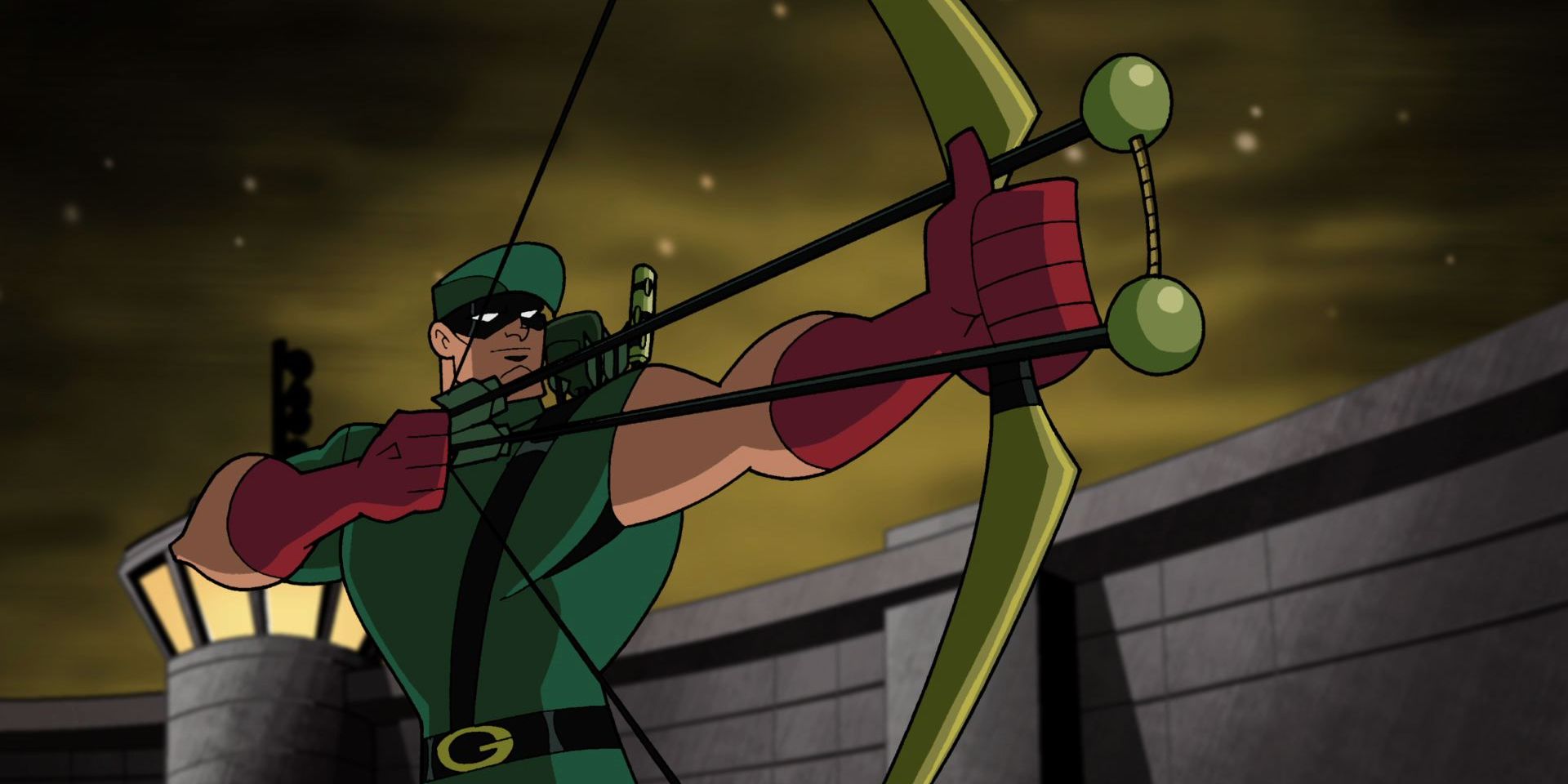
Green Arrow, from "Batman: The Brave and the Bold"

Looking back on 75 years’ worth of Green Arrow is instructive. For one thing, it puts that 1969-70 makeover in perspective. Denny O’Neil and Neal Adams may have been Green Arrow’s two most influential creators, but they only worked on the character together for about a year; and O’Neil’s time with Ollie on the revived “Green Lantern” only lasted about another four years. The extended “Adams suit” era spanned about 17 years, from late 1969 to 1987; but that was almost thirty years ago. Although the 2001 revival (and subsequent series) downplayed the grittier “Longbow Hunters” era in favor of the O’Neil/Adams version, the “Arrow” TV series takes its cues more from the Grell- and Dixon-written series (not to mention the Christopher Nolan Batman movies) than it does from O’Neil/Adams.

To be sure, there’s a live-action or animated Green Arrow for every era’s fans. Besides “Arrow’s” grudging acceptance of superheroics, there’s “Smallville’s” more upbeat interpretation, “Justice League Unlimited’s” take on O’Neil/Adams, and the Silver Age excesses of “Batman: The Brave and the Bold.” While each is clearly distinct from the other, none seems overly at odds with the character’s comics background.

Still, it’s easy to forget — particularly for a DC lifer like me — that despite the staying power of the O’Neil/Adams makeover, it’s not necessarily the be-all and end-all of Green Arrow. Unlike O’Neil and Adams’ Batman revitalization (also in late 1969), it didn’t go back to the character’s Golden Age origins. Instead, it uncoupled Green Arrow from one of the main elements he shared with Batman, and replaced it with a clear authorial voice. Mike Grell did much the same with “The Longbow Hunters,” just changing Ollie’s perspective to fit Grell’s particular approach. If you put the initial “O’Neil/Adams era” of the ’70s and ’80s together with its revival in 2001-11, the resulting 27-odd years almost equal the character’s relatively-bland Golden and Silver Age eras (1941-69). That leaves about 13 years’ worth of Grell and Dixon-written stories (1987-2000), plus the past five years of New 52 and Rebirth series (2011-16).

It all adds up to a character with some pretty decent potential, whether as a straight-up superhero, an outspoken crusader, or a gritty urban warrior. While he doesn’t have the unbroken publication history of DC’s Trinity, over the past 75 years Green Arrow has never really gone away. Instead, he’s proved pretty adaptable, even if he sometimes he comes across as a relic from a more rough-hewn time. That’s entirely appropriate for a self-taught survivalist, don’t you think?

The post Archery, Activism, Anniversary: Celebrating 75 Years Of Green Arrowappeared first on CBR.com.

via Archery, Activism, Anniversary: Celebrating 75 Years Of Green Arrow — CBR.com

20161022 – News : Comic Con de Paris : cinq bonnes raisons d’aller se frotter aux super-héros – LCI

#TÉLÉ: PROGRAMME – Le Comic Con s’installe à la Grande Halle de la Villette à Paris du vendredi 21 octobre au 23 octobre et attend les plus férus de pop culture d’entre vous. Comics, séries, super-héros, cinéma et costumes, il y en a pour tout le monde. LCI vous propose cinq bonnes raisons pour vous y rendre ce week end.

Vous ne savez pas quoi faire de votre week-end ? Vous avez déjà rattrapé toutes vos séries (on sait très bien que c’est impossible) ? Vous avez lu vos derniers comics et êtes en manque de lecture ? Alors LCI vous conseille de vous rendre à la Grande Halle de la Villette à Paris ces samedi 22 et dimanche 23 octobre, pour faire le plein de pop culture.

Eliza Dushku (Buffy contre les Vampires), Mike Colter (Luke Cage), Rebecca Romijn (Flynn Carson et les nouveaux aventuriers) et Dominic Purcell (Prison Break, Legends of Tomorrow) seront présents pour des séances d’autographes, de photos mais aussi pour des conférences retraçant leur parcours et leurs dernières séries.  La télévision française n’est pas en reste puisque François Descraques et Thomas VDB notamment, seront là pour présenter Dead Landes, prochainement sur France 4.

Nos bonnes raisons pour y foncer

  • 1 – Redécouvrir Buffy contre les vampires avec Eliza Dushku

    L’actrice (vue dernièrement dans Banshee saison 4) débarque à Paris pour rencontrer ses fans, mais aussi revenir sur son expérience dans la série Buffy contre les Vampires. Lors de deux conférences, elle va évoquer son travail avec Joss Whedon, le samedi à 10h15-11h15 dans la Grande Salle Melty, et explorer sa carrière le dimanche de 11h15 à 12h15 au même endroit.

  • 2 – Faire une photo avec Dominic Purcell

    Préparez vous plus beaux tatouages et vos plans d’évasion les plus ingénieux pour des séances de photos et dédicaces avec Dominic Purcell. L’acteur de Legends of Tomorrow, qui revient avec une nouvelle saison de Prison Break en 2017, ne sera présent que le dimanche 23.

  • 3 – Découvrir Dead Landes, la première série TV de François Descraques

    Fans du Visiteur du Futur ? Dead Landes est faite pour vous. D’internet à la télévision, François Descraques n’a rien perdu de son écriture ciselée, ses dialogues savoureux et ses personnages aussi drôles qu’attachants. Dead Landes nous emmène dans un camp de vacances miteux en pleine fin du monde. Dimanche de 15h30 à 16h30 le dimanche.

  • 4 – Retracer la carrière de Michel Hazanavicius

    Le réalisateur français sera présent ce samedi 22 octobre pour une conférence dans la Grande Salle Melty. OSS117, The Artist, Le Grand détournement : il reviendra sur sa carrière de réalisateur, producteur, scénariste et acteur. Ce n’est pas tous les jours que le détenteur d’un César et d’un Oscar (du meilleur film pour The Artist) vient discuter devant nos yeux.

  • 5 – Voir en avant-première Doctor Strange

    Impatient de découvrir Doctor Strange, la nouvelle production Marvel, au cinéma ? N’attendez pas le 26 octobre, et venez ce dimanche 23 à la soirée de clôture du Comic Con pour la projection en avant-première du film porté par Benedict Cumberbatch.

Source : Comic Con de Paris : cinq bonnes raisons d’aller se frotter aux super-héros – LCI

20161018 – Marvel Comics Solicitations for January 2017 — CBR.com

Marvel Comics has provided CBR with covers and solicit information for product shipping January 2017. Discuss these solicitations here on CBR’s Marvel Comics forum and share with fellow fans what titles spark your interest. Marvel Solicitations – Last Six Months Product shipping December 2016 Product shipping November 2016 Product shipping October 2016 Product shipping September…

via Marvel Comics Solicitations for January 2017 — CBR.com

20161017 – Supergirl in Crisis: The Man of Steel Carries His Cousin on CW Comic Cover — TVLine

Supergirl has definitely seen better days. The CW’s newest caped crusader appears (unconscious) with her equally super cousin on a mock comic book cover, released by The CW in advance of Monday’s new episode (8/7c). It’s a recreation of Crisis on Infinite Earths, originally published by DC Comics in the mid 1980s, in which Supergirl *gulp* meets…

via Supergirl in Crisis: The Man of Steel Carries His Cousin on CW Comic Cover — TVLine

20161011 – PREVIEW: Champions #2 — CBR.com

Welcome to the CHAMPIONS, Cyclops! Unfortunately, not all of your new would-be teammates feel the same way! The post PREVIEW: Champions #2 appeared first on CBR.com.

via PREVIEW: Champions #2 — CBR.com

20161011 – The Avengers #1 (EXCLUSIVE PREVIEW) — CBR.com

The time has come! Their ranks shattered by Civil War, their spirits weighted down by a toll both personal and spiritual, Earth’s Mightiest Heroes must find the resolve to stand united one final time against their greatest foe! Captain America! Thor! The Vision! The Wasp! Spider-Man! Hercules! When the dust settles, not a one of…

via The Avengers #1 (EXCLUSIVE PREVIEW) — CBR.com

20161011 – Supergirl’s James Olson to Become DC Hero, The Guardian — CBR.com

While speaking with the press today, including CBR, “Supergirl” executive producer Andrew Kreisberg revealed James Olson — played by Mehcad Brooks on The CW program — will soon be bit by the hero bug and become The Guardian. “James will decide he can no longer sit back and be a sidekick,” the producer said. “[It]…

via Supergirl’s James Olson to Become DC Hero, The Guardian — CBR.com

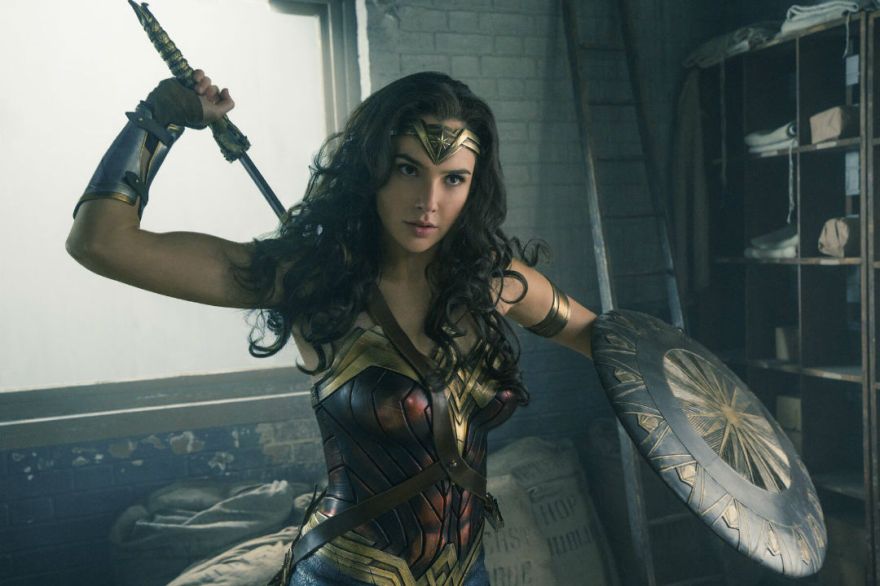
20161011 – Gal Gadot Says They Kept ‘Wonder Woman’ Simple

In an interview with Variety, Gadot talked about how she appreciated having a female director for ‘Wonder Woman‘ and whether the film addresses her sexuality.


Source : Gal Gadot Says They Kept ‘Wonder Woman’ Simple